When director Chris Columbus decided he wanted to use 671 Lincoln Avenue in the Chicago suburb of Winnetka as the setting for Home Alone, he described the stately five-bedroom Georgian house as “warm and menacing.” This came as a surprise to John Abendshien, who owned it.
“I thought, what on earth does he mean by ‘menacing’!” Abendshien recalled with a chuckle to The Independent. “I always thought it had a warm vibe! But when I saw the completed film for the first time, and the scene where Kevin is preparing to do battle with the Wet Bandits, with John Williams’ soundtrack in the background, and those eerie lights coming out of the house, I thought yes, I get the ‘menacing’ bit now!”
Home Alone was released in 1990 and immediately became a smash hit, topping the box office for three months. In the 35 years since, the tale of eight-year-old Kevin McCallister (Macaulay Culkin) defending his home from a pair of dim-witted robbers by any means necessary has cemented its status as a beloved Christmas staple. It is rewatched by millions of fans every year, for whom the grand McCallister house has become as familiar as their own homes.
In 2023, Dick Van Dyke appeared on the season premiere of The Masked Singer. Hidden inside an ornate gnome costume, the veteran performer sang a rousing version of Louis Armstrong’s “When You’re Smiling” that had the studio audience up on their feet. When he was unmasked later in the episode, the emotional reaction was even stronger.
As the crowd exploded and judge Ken Jeong thanked Van Dyke for inspiring him to get into comedy, Nicole Scherzinger simply burst into tears.
“I love you so much… we love you… The whole world loves you so much,” she exclaimed. “I can’t believe you’re here… I’m trying to play it cool, but you look so gorgeous… You look so handsome.”
Before bursting into a rendition of Mary Poppins classic, “Supercalifragilisticexpialidocious”, Van Dyke replied: “Oh, thank you… I’m 97 years old!”
Scherzinger wasn’t exaggerating. Over 60 years since he first shared his dodgy cockney accent with the world as Bert “the chim-er-nee” sweep in Mary Poppins, Van Dyke is more beloved than ever. As he turns 100 today (December 13), he has become that rare unifying pop culture figure able to bring together fans from multiple generations and across cultural and political fault lines.
Jimmy Cliff had one of the sweetest, smoothest voices ever to come out of Jamaica, but to think of him only as a reggae star would be to understate the breadth of his talent and ambition. The pioneering singer and actor — who has died aged 81 — was a restless soul constantly in search of unexplored territory.
Some questioned whether his life would have been easier if he had just stayed in Jamaica making reggae albums instead of journeying around Europe and Africa or traveling to Muscle Shoals Sound Studio in Alabama to record soul and rock music.
“I felt, ‘If I put me in this one little bag, I’m going to be suffocated. How am I going to say what else I want to say?’” he told The Independent in 2003. “And that has been a big struggle in my career. They say, ‘You’re a Jamaican, you’re known for reggae,’ so you’re supposed to do that. But I won’t… Looking for the new, that’s fundamental to me.”
I first fell in love with Cliff’s rich, mellifluous voice when I was a schoolboy, after his laid-back but infectiously cheerful cover of Johnny Nash’s “I Can See Clearly Now” became an international hit in the early Nineties. The song was a three-minute dose of sunshine breaking through our gloomy British skies.
I wasn’t sure if I’d make it to see David Byrne tonight. My grandmother died this morning, half a world away. It turned into a day of high emotion spent remembering a woman who loved me and my siblings selflessly and unreservedly. Los Angeles seemed to know how I was feeling: the grey skies wept, turning the streets into rivers. At first I didn’t feel much like leaving the house, but when the evening came I was determined to set sail for Hollywood Boulevard. I am, after all, a professional, and perhaps someone “burning down the house” would take my mind off things.
Byrne turned out to be just what was needed: a life-affirming salve delivered in the form of an awe-inspiring spectacle. The 73-year-old has been experimenting with the art of stagecraft since Talking Heads first took the stage at CBGB, dressed like accountants, in 1975. Fifty years on, he’s promoting his new playful, occasionally goofy, solo record Who Is the Sky? It manages somehow to live up to the high bar set by Talking Heads’ groundbreaking Stop Making Sense tour in 1983 (immortalised in the concert film by Jonathan Demme) and his own acclaimed American Utopia run in 2018 (given similar treatment by Spike Lee). Byrne is a professional. The only unknown variable is the audience. About five minutes before the show starts, he makes an announcement to those in attendance that the venue owners have confirmed… it will be OK to dance.
The production for the Who is the Sky? tour in many ways picks up where American Utopia left off. Byrne is once again joined by a large backing group comprising five dancers and seven musicians, all of whom move freely around the stage in a routine by choreographer Steven Hoggett.
Some things, however, have been refined. The grey American Utopia uniforms have been replaced by rich blue suits designed by Veronica Leoni for Calvin Klein. There are vast, high-definition projections capable of transforming the stage in an instant. On opener “Heaven”, for example, Byrne and his band appear to be standing on the surface of the moon, with the Earth rising behind them. “There she is,” says Byrne, pointing to the blue planet. “Our heaven. The only one we have.”
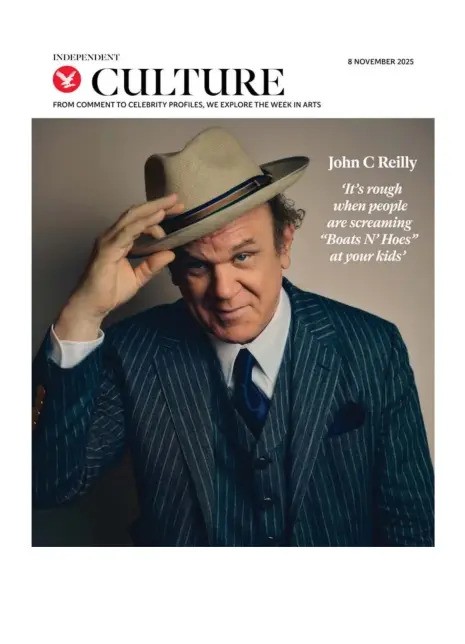
John C Reilly eyes me warily as I approach him at the deli in the San Fernando Valley where he’s suggested we meet for lunch. He’s standing near the door, dressed in a tan fedora with black suspenders holding up his slacks, looking like a man out of time. His shirt sleeves are rolled up in acknowledgement of the Southern Californian heat, and he appraises me with a cagey look that seems to ask: Is this the writer sent to interview me, or just some crazed fan wanting a selfie and to “shake and bake” with the guy from Talladega Nights?
A few moments later, after we slide into a booth and order matzo ball soup and pots of tea, Reilly confesses he’s become uneasy with his level of fame. When his career first took off in the mid-1990s, Reilly’s humanity and emotional authenticity made him one of America’s finest character actors, beloved by auteurs including Paul Thomas Anderson and Martin Scorsese. Then came a string of big-budget comedies: his aforementioned Will Ferrell Nascar romp in 2006 was followed in quick succession by sublime music spoof Walk Hard and Step Brothers, his reunion with Ferrell that cast the pair as rival step-siblings. It was those films that made Reilly a different kind of recognisable.
“That part of it I didn’t see coming, and I don’t especially like it,” he winces. “I’m much more shy and private than fame allows. I’m not one of those performers that has a hole deep inside that has to be filled by the audience’s anonymous affection.” That shyness marks our time together. On topics he’s keen to talk about, Reilly will happily hold court for 20 minutes uninterrupted. That verbosity, though, is a sort of defence mechanism, a means of keeping the conversation on safe ground; when we veer towards subjects he’s not interested in discussing, he has no qualms about letting a silence hang in the air.
Lately, Reilly has been wondering what it is that motivates him. In recent years, he’s enjoyed blockbuster success voicing the title character of Disney’s Wreck-It Ralph films, and critical acclaim leading an ensemble cast in the HBO basketball drama Winning Time. When the latter was cancelled in 2023, he allowed himself a moment to ponder what he wanted to do next. “I was trying to find meaning for my own life,” he says. “I’m 60 years old. I’ve done over 80 movies, a whole bunch of plays. I’ve made a lot of money and got pretty famous for a kid from the south side of Chicago. I asked myself: what gets you up in the morning now?”
Several years ago, while visiting the Roman Baths in Bath, I found myself overwhelmed by a profound feeling of existential insignificance. Standing beside the spring water in the remarkably well-preserved bath house, I started picturing the humans, not so unlike me, who had come to wash themselves at that exact spot almost 2,000 years earlier. Each of them doubtless had hopes, dreams and everyday worries that seemed vitally important, yet all of them had long since been rendered flatly meaningless by the same indifferent march of time that would one day relieve me of my own trivial ambitions. It was almost enough to put me off my souvenir fudge.
That same disorientating sensation rushed back to me as I watched How to Shoot a Ghost, a short film by Charlie Kaufman that screened last Friday at AFI Fest in Los Angeles. Kaufman has often explored the big questions of life, death and memory in surreal and astonishing screenplays, including Being John Malkovich, Adaptation, Eternal Sunshine of the Spotless Mind and Synecdoche, New York, but here he directs from a lyrical script written by the Canadian-Greek poet Eva HD.
The new short follows a translator (Josef Akiki) and a photographer (Jessie Buckley) who have both recently died of unrelated causes in Athens, a place already teeming with the ghosts of various eras. As the spectral pair wander through the ancient city snapping pictures, Kaufman cuts their narrative together with street photography, historical footage and old home videos. The wistful film invites us to wrestle with our own doomed attempts to preserve or capture our fleeting, ephemeral existences. “[Buckley’s] character is trying to hold on to life,” Kaufman tells me the morning after the screening. “I think that’s her motivation in photographing everything, and she can’t. No one can, but certainly after you’re dead you can’t.”
On the morning of 1 October 1975, Muhammad Ali and Joe Frazier stepped into a boxing ring in the Philippines to duke it out for the heavyweight championship of the world. The “Thrilla in Manila”, which Ali won after 14 punishing rounds, caused shockwaves around the planet – not just because of what happened in the sticky heat of the ring, but because of the revolutionary way it was being watched.
Some 9,000 miles away in Vero Beach, Florida, it was still the evening of 30 September when 150 senators, congressmen and television executives gathered to witness HBO become the first television network in history to deliver a continuous live signal via satellite.
“You could not have picked a better event, in all the world, to demonstrate the power of satellites for a new industry than the Thrilla in Manila,” remembers Kay Koplovitz, who was there in the room. What had seemed like a science-fiction fantasy just a few years earlier was suddenly a reality. Television would never be the same.
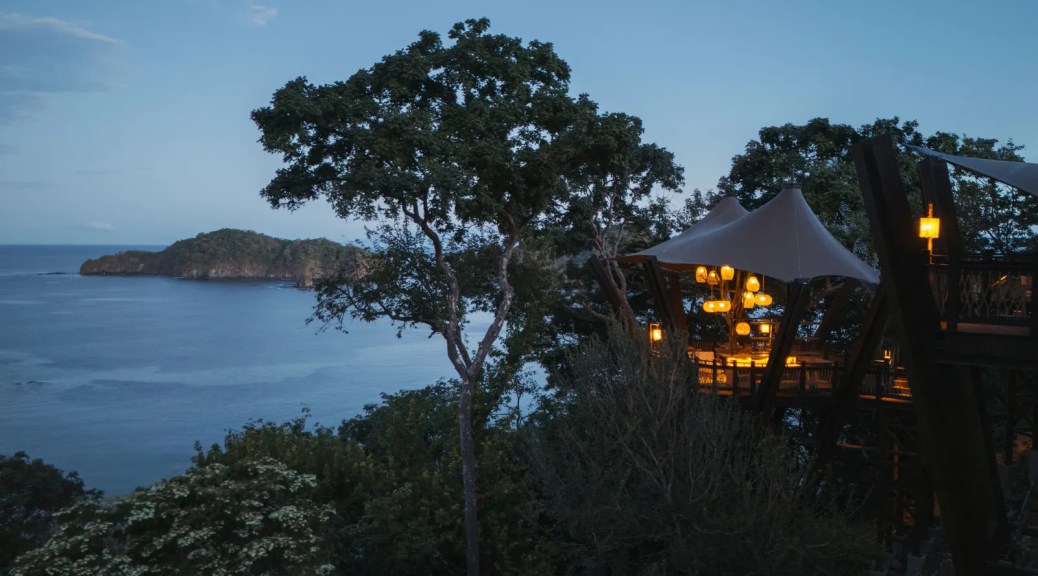
The northwestern corner of Costa Rica is one of the most biodiverse areas of the world, so it’s essential that when a new ultra-luxury property arrives, it takes care not to trample on the region’s outstanding natural beauty. In that respect, Nekajui, which opened earlier this year, is a tour de force. The first Ritz-Carlton Reserve in Central America, and only the eighth in the world, stretches over 570 hectares of lush cliffside, but if you gaze up towards it from the sapphire waters below, you can barely tell it’s there at all. This impressive sleight of hand is pulled off thanks to thoughtful biophilic design that includes a dramatic hanging bridge over a verdant canyon, a bar suspended in a tree house and a funicular that runs like a glass elevator down to a secluded sandy cove.
What’s on your doorstep?
Nekajui is the newest resort on the exclusive Peninsula Papagayo, a 1,400-acre promontory jutting into the Pacific that first came to the attention of luxury travellers with the opening of a Four Seasons 20 years ago. There are also a handful of private homes, including one by the noted architect Antoine Predock. 70 per cent of the peninsula remains protected from any sort of development and is covered by a tropical dry forest that teems with thousands of plant and animal species. At Nekajui, it’s not unusual to see brightly coloured birds taking up a perch beside the pools or to spot howler monkeys breakfasting in the treetops below the balconies. The hotel works closely with local guides Papagayo Explorers, who can arrange zip-lining, kayaking and forest tours. On a morning hike with lead naturalist Jhonny Hernandez, we breathlessly observed the remarkably coordinated courtship dance of the long-tailed manakin. ‘This,’ whispered Hernandez, ‘is a real Nat Geo moment.’
This luxurious modern resort is nestled around a secluded bay on Costa Rica’s Pacific coast, and offers cascading pools, exceptional spa facilities and a tranquil escape.
Location
A 35-minute drive west from Liberia International Airport through lush hills and fields of sugar cane brings you to Punta Cacique, a verdant headland on Costa Rica’s Pacific coast. The Waldorf Astoria sits near the tip of the promontory, curled around the small but idyllic Playa Penca.
The sleepy beach town of Playa Hermosa is a short distance away, while the Rincón de la Vieja volcano and its surrounding national park are a couple of hours drive to the north. Public transport options are minimal and Uber is unreliable so it’s worth hiring a car or arranging transport through the hotel if that’s an area you want to explore. At least traffic won’t be an issue: the northwestern province of Guanacaste is the most sparsely populated area in the country.
The vibe
Having only recently opened in April 2025, the first Waldorf Astoria in Costa Rica pulls off a smart trick by feeling both completely modern and like it has been there for decades. The property’s many buildings are neatly terraced within the natural contours of the bay, so although there are 148 rooms and 40 suites here the hotel never feels imposing or like it overwhelms the natural beauty of its setting.
At the centre of the complex are no less than 10 separate pools, spread across various levels so you often feel as if you’re swimming alone. There are adults-only areas as well as a kid-friendly pool complete with a water slide (okay, adults may well enjoy this too). As pristine as the pools are however, none can really compare to the welcoming warmth of a dip in the ocean off Playa Penca. The hotel can provide snorkels, and within moments of setting out from shore you’ll likely find yourself surrounded by inquisitive pufferfish and angelfish.
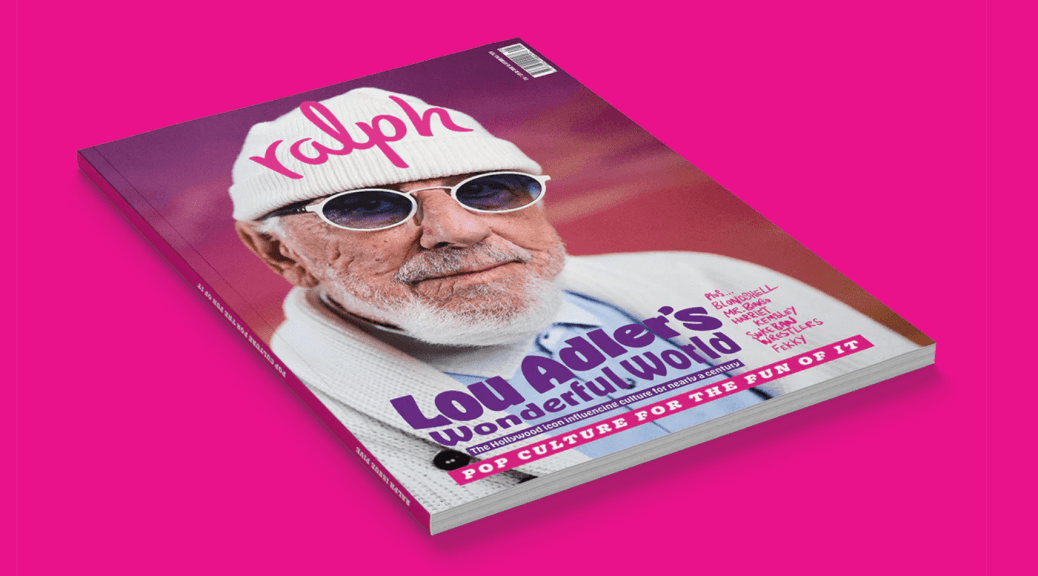
Lou Adler walks into The Roxy on LA’s Sunset Strip like he owns the place, because he does. He rolls in through a side door in a slouchy white beanie that matches the frames of his shades, his neat, snowy beard and his baggy long-sleeved shirt, looking like he just sidled off a billboard promoting some impossibly hip streetwear brand. As he surveys the early afternoon scene, taking in the empty stage and the crouched bartender restocking drinks, I head over to introduce myself and realise I might be in the presence of the coolest 91-year-old alive. Lou is more than a legend of music and movies. He’s the living embodiment of the California dream.
By the time he threw open the doors of this iconic venue in 1973, Lou was already a Grammy-winning record producer and songwriter who’d played a not insignificant role in the birth of the modern music festival. Within another decade, he’d added “box-office-smashing film producer” and “cult comedy director” to his already staggering CV. After that, he eased back on the work commitments to concentrate on raising his sons – all seven of them.
Lou, as you can tell, is not a man who does things by half. He’s fine-tuned pop hits with Sam Cooke, Carole King and The Mamas & the Papas, sparked stoner gags with Cheech and Chong and partied with Jack Nicholson. He’s seen, heard and smoked it all. Later, I’ll make the mistake of wondering out loud if some pivotal moment of LA history happened before his time. Lou will laugh, and deadpan: “Nothing is before my time.”
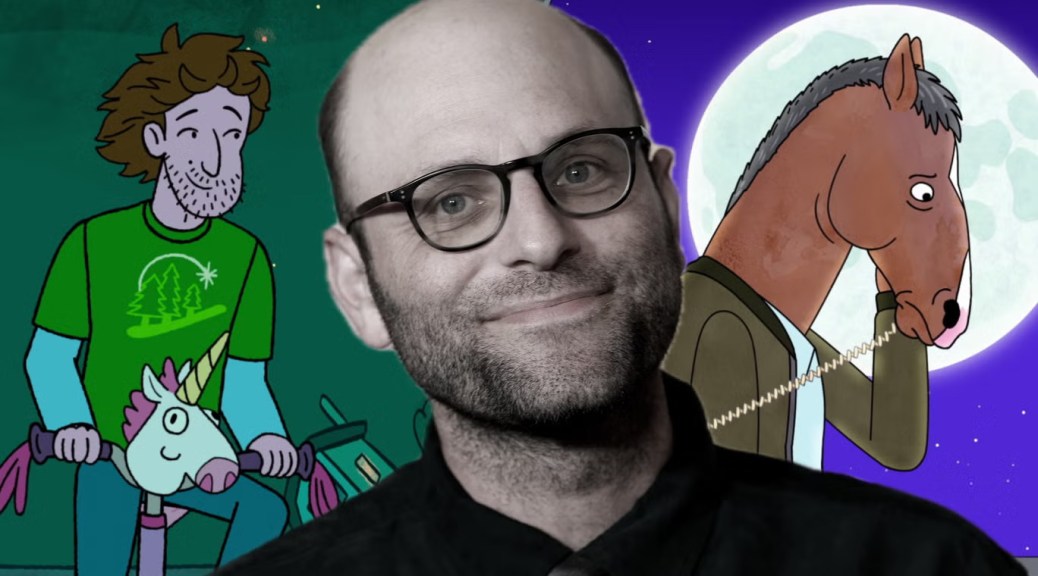
Raphael Bob-Waksberg knows how to tell a joke. This comes as no surprise: the 40-year-old American writer was the creator of BoJack Horseman, one of the funniest TV shows in recent memory. The Emmy-nominated Netflix animation ran for six seasons between 2014 and 2020, and was crammed with jokes – visual gags, Hollywood satire, ornate wordplay – and cut with raw, human pathos. His favourite joke, however, Bob-Waksberg inherited from his father.
A Nazi,he begins, is driving down the street. “And when I say Nazi, I mean an actual, classic, German Nazi. The whole shtick. The sort of guy who would murder me for saying the word ‘shtick’.” Bob-Waksberg, dressed casually in a checked shirt and baseball cap, is getting into the setup, gesticulating. “Anyway, this Nazi is driving down the street and he sees a Jew with a long beard and the hat. He rolls down his window and says: ‘You, Jew! Who is the enemy of the German people?’ And the Jew knows the answer, so he goes: ‘The Jews and the bicycle riders.’” He pulls a puzzled expression. “The Nazi says: ‘Why the bicycle riders?’ And the Jew says: ‘WHY THE JEWS?’”
I laugh. Bob-Waksberg smiles shrewdly. This particular joke, he says, explains something fundamental about his comic sensibility. BoJack was, on one level, a daffy comedy about a washed-up TV star who happens to be an anthropomorphic horse. But it was also deeply sincere – a Sopranos-influenced character study of its depressed, substance-abusing antihero. Bob-Waksberg’s new animated series Long Story Short, is a very different sort of show, but one that’s similarly concerned with finding light in the dark (or vice versa). “What I love about that joke is, first of all, I think it’s funny,” he says, speaking today from Los Angeles. “I think it plays with expectations, but I also think there’s real pain there. A lot of what I think the best comedy is, and a lot of the comedy that I write, comes from pain. It is an intermingling of humour and sadness and real cathartic laughter, and I hope this show can be that for some people.”
In the early 2010s, it seemed as if everyone in indie rock wanted to be Mac DeMarco. The Canadian was the ultimate slacker success story, traversing the globe playing sold-out shows with a guitar in one hand, a half-drunk whiskey bottle in the other and a cigarette dangling from his lips. These days, at 35, DeMarco is already encountering a new generation that just doesn’t see the appeal. “It’s frustrating for me when I meet these young musicians who are like: ‘Oh, touring is so hard and exhausting,’” he says. His tone, at first incredulous, turns lightly mocking. “Maybe there are just too many nepo babies now that are used to sunning themselves in the south of France every summer going: ‘Oh Papa, this venue is so dark and stinky. I’d rather be on the shores of Marseille…’”
Much has changed for DeMarco since those debauched days in 2012 when he first sauntered onto the scene with his sleazy and subversive mini-album Rock and Roll Night Club and its laidback, hook-filled follow-up 2. Today he has a bigger fanbase than ever, with over 20 million Spotify listeners each month, but he’s left his hard-partying lifestyle behind. In conversation, he now cuts an altogether more contemplative figure – without the slightly frayed, nicotinic air of old. One thing that hasn’t changed, however, is his zeal for life on the road. “I tell those young musicians: ‘Don’t you see? This is why!’” he says, his voice rising with the verve of a religious proselytiser. “You get to go on vacation with your friends indefinitely, hang out with new people every night and you’re getting paid to do it! It’s the ultimate adventure!”
Today he’s talking to me down the line from a farmhouse on British Columbia’s Gulf Islands, where he’s decamped with his girlfriend Kiera McNally to grease the wheels for his own next world tour. He recently helped his mother Agnes move to a new home in Victoria, and bought his own tumbledown place a couple of hours away to enjoy the tranquillity of what he calls “a summer cabin kind of vibe”. Soon, his bandmates will join him to start rehearsals. There’s also a new album, Guitar, which he recorded alone at his home studio in Los Angeles in a fortnight and was initially just a pretence to get back touring. “I just wanted to go out and perform,” he says. “We could do that without releasing something, but I think that would make me feel like it was a reunion or greatest hits tour.”
The Los Angeles bar scene is as tough to neatly condense and define as the sprawling city itself. Diverse neighbourhoods jumble together side by side, each with its own sense of style and history, not to mention distinctive flavour palettes. A night out in the City of Angels can shift between contrasting backdrops quicker than a busy actor changes roles.
One thing that does unite this disparate city is Southern California’s abundant wealth of world-class fresh ingredients, which means cocktail menus are often updated to keep pace with the rhythms of the local farmers’ markets. It’s also true that wherever you go in this town, agave is king. The popularity of tequila and mezcal-based drinks has far outpaced their vodka-based equivalents.
From gritty downtown to historic Hollywood and the rarefied environs of Bel-Air and Beverly Hills, here are the very best places in Los Angeles to enjoy expertly-made drinks in artfully curated surroundings.
The sprawl of Los Angeles is dotted with superb restaurants, happening bars and myriad other attractions, all of which are determined to get their hands on your hard-earned dollars. The good news is that one of the best ways to make your visit to one of the world’s most expensive cities easier on your wallet is by booking a stay at one of these excellent hotels, all of which are eminently affordable without sacrificing quality.
The trouble with most of LA’s budget-conscious hotels is that they’re located close to the city’s main airport, LAX, but these come with a catch as they tend to be a long way from the aforementioned attractions so you’ll end up spending significantly more time and money on transport.
Here’s our pick of the best hotels in Los Angeles that offer the chance to stay at a prime location without breaking the bank.
On a recent sun-kissed afternoon in midtown Los Angeles, around 100 art-lovers gathered for a guided walkthrough of the new Diane Arbus retrospective at blue chip dealer David Zwirner’s flagship 30,000 sq ft gallery. When the event was over, they spilled out in every direction into the heart of one of the most exciting and fast-developing art districts anywhere in the world. In just a handful of years, the radical transformation of the blocks around the intersection of Melrose and Western Avenues has proved an old adage wrong. It used to be said that nobody walks in LA. These days, there are few better places to spend a day wandering around than amid the galleries and restaurants of Melrose Hill. ‘You can come here, park, have a nice lunch and go see seven different art shows,’ says Fernberger gallery owner Emma Fernberger. ‘That’s amazing.’
The area’s rapid reinvention didn’t happen by accident. Historically home to rows of furniture warehouses, the neighbourhood was hit hard when online retailers devoured much of the market and those traditional businesses moved out. Actor and developer Zach Lasry, the son of billionaire businessman and former Milwaukee Bucks owner Marc Lasry, noticed the untapped potential whenever he visited his then-girlfriend, now-wife Arianna, who lived on nearby Wilton Place. Beginning in 2019, he and his family bought 18 buildings within a three-block radius.
‘The architectural rhythm reminded me of the Bowery in New York, where you have all these old buildings lined up,’ says Lasry. ‘The Bowery was all restaurant supply stores, so it was a single-use street for a certain industry. This was similar because it was furniture row. It seemed like it had the right mix of location and building stock that it could become something really, really fun.’
When sudden tragedy struck, Natalie Bergman found solace in the New Mexico desert. Shedding indie rock for psychedelic gospel-soul, music played a big part in her healing – while her latest album finds fresh hope in new life. “People form bands because we’re lost,” she tell me. “We’re like: ‘Hello, we’re looking for our home here on Earth.'”
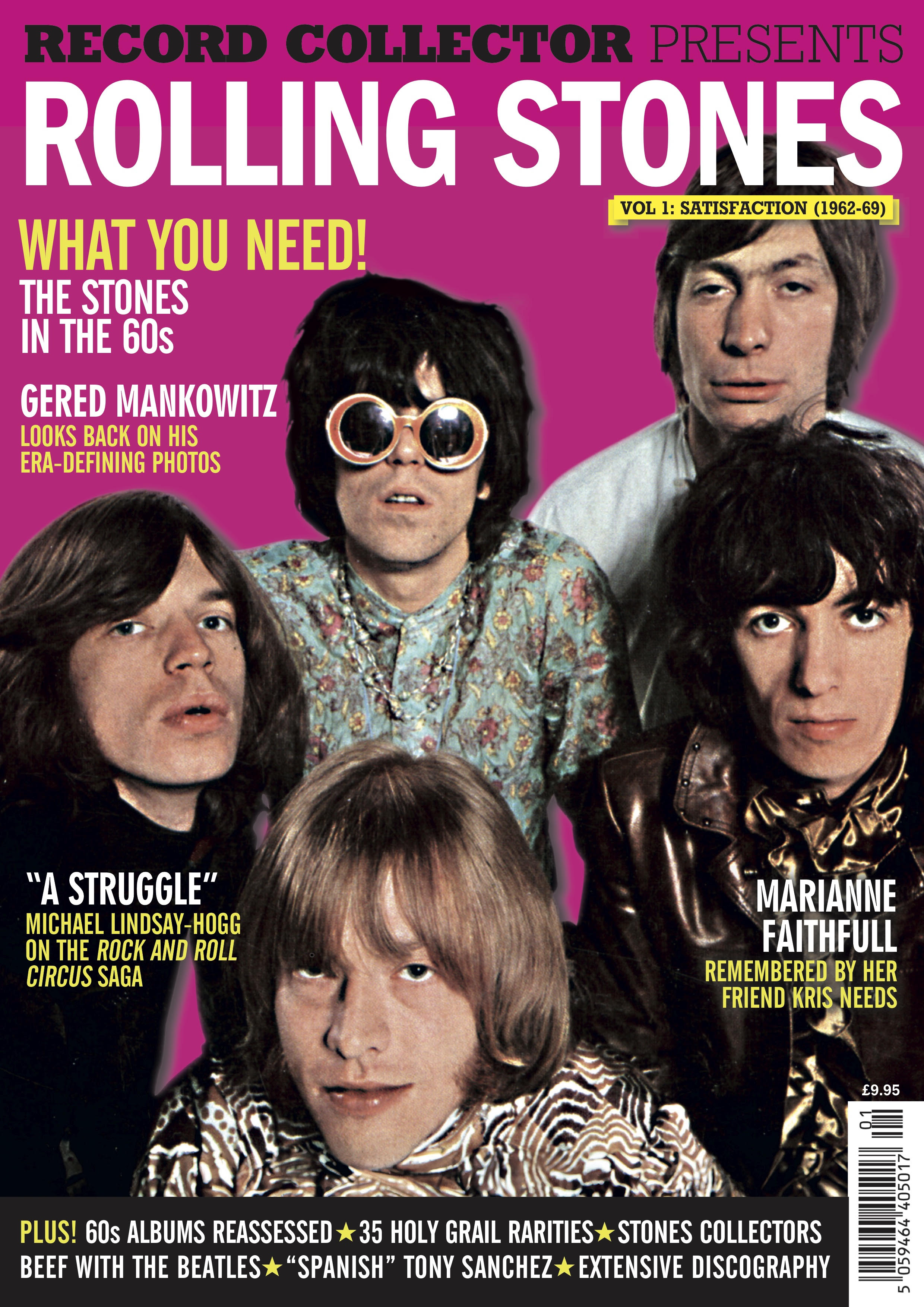
When journalist Stanley Booth joined the Stones’ 1969 US tour for his classic book The True Adventures Of The Rolling Stones, he stumbled into a personal hell
On a mild night in Hollywood, Bob Dylanis still not ready for his close-up, Mr DeMille. When the 83-year-old strikes up his band, stationed behind his upright piano and mumbling his way through his Oscar-winning 2000 single “Things Have Changed”, the screens on either side of the Bowl remain defiantly dark. They do eventually flicker into life a handful of songs later, but even then only to offer a fixed wide shot of Dylan at centre stage with his bandmates grouped around him like a Roman phalanx. As an audience, we perhaps sense we are being kept at arm’s length. “I used to care,” drawls Dylan. “But things have changed.”
For this third date of the 10th anniversary tour for Willie Nelson’s Outlaw Music Festival, Dylan follows immediately in the wake of the Michigan-born bluegrass player Billy Strings, whose set climaxes in a frantic, high-energy tornado of duelling guitars and banjos.
The octogenarian Dylan’s set begins at a more relaxed clip but builds swiftly into a heady blend of early classics, deep cuts and covers. He seems to be enjoying himself. After a stuttering “Simple Twist of Fate” and a swooning “Forgetful Heart”, he lets out a loud chuckle and asks someone in the audience: “What are you eating down there? What is that?”
For all his own magnificent material, the early highlight of the set is his cover of George “Wild Child” Butler’s Chicago blues number “Axe And The Wind”. The song was a new addition to Dylan’s repertoire just two dates ago, but its bluesy swing suits him and his band down to the ground. The lyrics were written by the great bluesman Willie Dixon but the indelible closing line – “I may be here forever, I may not be here at all” – doesn’t appear on the original recording and is surely a Dylan refinement. A similar righteous stomp powers his own “Early Roman Kings”, from 2012’s Tempest, another standout.
By now Dylan fans are well accustomed to his rearranging of his own standards, and the expansive new version of “All Along The Watchtower” is a wild delight. That’s followed by another pair of reinvented classics, “It Takes A Lot To Laugh, It Takes A Train to Cry” and “Desolation Row”. On either side of that run, Dylan delves into his own internal library for a pair of covers that seem to speak to his personal history: “I’ll Make It All Up To You”, a 1958 hit for Jerry Lee Lewis, and “Share Your Love With Me”, recorded by both Bobby “Blue” Bland and Aretha Franklin.
After a strutting “Love Sick”, from 1997’s Time Out Of Mind, Dylan takes a moment to introduce his band: rhythm guitarist Doug Lancio, longtime bassist Tony Garnier, new drummer Anton Fig and lead guitarist Bob Britt, praised as “one of those guys who went down to the crossroad and made a deal with the Devil, and boy you can tell.”
They close with “Blind Willie McTell” and a crowd-pleasing “Don’t Think Twice, It’s All Right”, on which somehow Dylan’s voice sounds stronger and younger than it has all night. If the audience feel they’re finally being invited in, it’s another feint. On the two previous stops of this tour, Dylan has returned for an encore and a surprise new cover: first The Pogues’ “A Rainy Night in Soho” and second Rick Nelson’s “Garden Party”. Tonight, he just disappears never to return. Oh well. As Nelson sang, and as Dylan doesn’t tonight: “You can’t please everyone, so you got to please yourself.”
Half an hour later, a banner across the stage drops down to reveal Willie Nelson seated in front of a rapidly unfurling American flag. As the 92-year-old sings an upbeat “Whiskey River” there’s a croak in his voice, but by the time he’s rattled through “Still Is Still Moving to Me”, “Bloody Mary Morning” and “I Never Cared For You” the old richness and warmth is back.
He’s flanked by two young members of his extended family: his own son Micah, also known as Particle Kid, and Waylon Payne, the son of his longtime guitarist Jody Payne and the country singer Sammi Smith. They help share the singing load, with Micah winning over the crowd by explaining that his song “(Die When I’m High) Halfway To Heaven” was written after his dad uttered the title line while they were getting stoned together. Payne, meanwhile, sings a rollicking version of Merle Haggard’s “Workin’ Man Blues” and Kris Kristofferson’s “Help Me Make It Through The Night”, which was a 1970 hit for his mother.
That allows Nelson to focus his energy on his signature hits: a singalong “Mammas Don’t Let Your Babies Grow Up to Be Cowboys”, an exuberant “On The Road Again” and the always heartbreaking “You Were Always On My Mind” and “Georgia (On My Mind)”. The very best moments, though, are when Nelson stares death in the face and laughs.
On his version of Tom Waits’ “Last Leaf”, the title track from his excellent recent covers record, he sings defiantly: “I’ll be here through eternity, if you wanna know how long / If they cut down this tree, I’ll show up in a song.” The audience cheer that sentiment, and they’re up on their feet dancing as Nelson runs straight into his own joint-in-cheek broadsides at mortality “Roll Me Up And Smoke Me (When I Die)” and “Still Not Dead”.
“I woke up still not dead again today / The internet said I’d passed away,” he sings on the latter, eyes twinkling. “But don’t bury me, I’ve got a show to play.” Long may this pair of never-ending tours keep rolling along.
Los Angeles is a playground for all ages. Where else can you tour a film studio, ride a rollercoaster and hit the beach all in one day? Beyond the famous sights of Hollywood and Venice Beach, the sprawling city is home to a mind-boggling array of family-friendly attractions. For film fanatics there’s Disneyland, the Universal Studios theme park and the Paramount Pictures studio tour. Sports nuts won’t want to miss catching a Lakers or Dodgers game, and you’ll also need to budget some time to explore the city’s museums, beaches and entertainment-packed piers.
If you’re keen to make your time in the City of Angels truly unforgettable, the key is choosing a place to stay that manages to keep the magic going even when bedtime finally rolls around. Here’s our round-up of some of the city’s most unique and inventive hotels that will appeal to children both young and old.
Given that it’s home to more celebrities per square mile than any other city on Earth, it’s no surprise that Los Angeles does luxury well. Whether you’re keen to soak up some old-school Hollywood glamour or just want to chill out and let your troubles drift away at an exclusive Malibu hideaway, there are a wide and varied selection of high-end hotels and resorts scattered around the city ready to make you feel like an A-lister even if your name isn’t likely to ever appear on the Walk of Fame.
Many of the city’s best hotels are clustered around Beverly Hills and West Hollywood, but if you’re hoping for Pacific views then there are also excellent options in Malibu and Santa Monica. You’d also be remiss to overlook Pasadena, a gorgeously landscaped and historic neighborhood with a landmark hotel to match. Here’s our pick of the most luxurious places to stay in Los Angeles in 2025.
Los Angeles is more than a city: it’s 10 cities wearing a trench coat. What’s most remarkable is that each of these contrasting areas has its own mood, often seeming to exist in an entirely different era to the next. Down a shot with the statue of Motörhead frontman Lemmy at the Rainbow Bar & Grill before swaggering down the Sunset Strip to catch a show at the Whisky a Go Go and you could be back in the heyday of ‘80s hair metal. Just a few miles away in Hollywood you can watch an old film at Grauman’s Egyptian Theatre, opened in 1922, and then cross the street for a Martini at Musso and Frank’s, which hasn’t changed all that much since 1919. Time travel is just a ride-share away.
There’s just as much variety on offer when it comes to choosing somewhere to stay. Many of the most storied and fascinating hotels in the city cluster around West Hollywood and Beverly Hills, and they’re a wise choice if you want a central base from which to explore the full extent of the city’s sprawl. There are also great options east in the grittier Downtown area, while you’ll need to head west if you plan to wake up with a view of the beach in Santa Monica or Malibu.
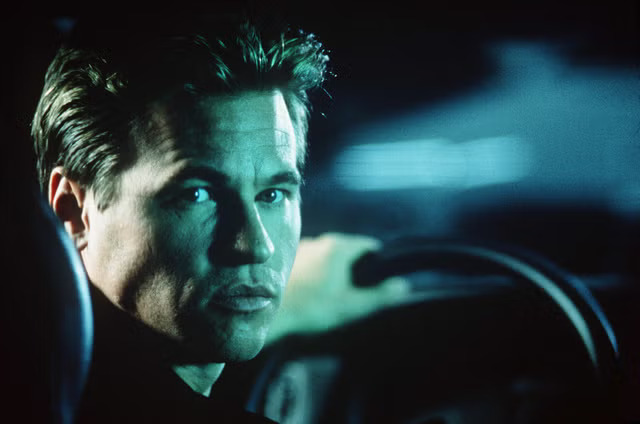
I thought Val Kilmer was a superhero from the first time I laid eyes on him. He was my first big-screen Batman, stirring some note of excitement in my soul that had remained untroubled by Adam West’s shark-repellent-bat-spray-wielding TV version. I was nine years old when Batman Forever arrived in cinemas, which was probably exactly the right age to be awed by its schlocky, larger-than-life charms. There was Tommy Lee Jones, seething as the terrifying Two-Face, Jim Carrey stealing scenes as the demented Riddler, and, at the heart of it all, there was Val himself, a superhero who looked like a matinee idol. At least he did when you could see his face. As Kilmer once remarked to the Orlando Sentinel: “Really, in that Batsuit, it wasn’t so much about acting except with your nostrils.”
At the time, it would never even have occurred to me that Kilmer – who died yesterday at the age of 65 – wasn’t having the time of his life strutting around in black rubber and flaring his nostrils at Nicole Kidman. In Leo Scott and Ting Po’s 2021 documentary Val, which was born out of thousands of hours of home video, Kilmer revealed that starring in Joel Schumacher’s comic book romp left him feeling like little more than a tiny cog in a giant machine. He had always seen himself making high art – he went to Juilliard after all – and years earlier had turned up his nose at Top Gun’s “silly script”, before being contractually obliged to play Iceman. He had no such obligation with Batman, though, so he turned down reprising the role for Batman & Robin, passing the poisoned cape to George Clooney, and made The Saint instead.
If, by some unlikely turn of events, I had been a child career adviser to Kilmer at this point, I’d have told him to make exactly that move. The Saint was even cooler than Batman. Based on a literary series by Leslie Charteris, The Saint had already been turned into a TV show in the Sixties starring Roger Moore, so naturally it was expected to provide Kilmer with his James Bond role. Here was a different type of superhero for him to embody: suave, sophisticated and with the top half of his face entirely unobscured.
Things did not work out as planned. Kilmer’s Simon Templar is apparently a master of disguise, but the outlandish costumes and not-great accents just don’t really work in the context of a film trying to play things straight. (It didn’t help that Austin Powers: International Man of Mystery came out in the same year, 1997, spoofing the sorts of films The Saint was indebted to and making it appear even more old-hat by comparison.) What had once been talked about as Kilmer’s chance for his own globe-trotting franchise turned out to be his final appearance as a leading man.
By his own admission, Carlos Santana has led a charmed life. In 1999, he walked into the studio to record “Smooth” only to find that a team of two dozen people had already figured out the bridge, the chorus and the verses. The song became an international smash hit, winning multiple Grammys and catapulting the virtuoso guitarist back to the top of the pop charts three decades into his career. “All I had to do was just close my eyes and play my guitar,” recalls the 77-year-old contentedly. “I’m happy to say that it’s been like that with my life since I can remember. I just show up, the great spirit orchestrates the scenario, and all of a sudden Carlos Santana looks and sounds really, really good!”
Today he’s at home at his $20m, 8,000 sq ft retreat overlooking Hanalei Bay on the Hawaiian island of Kauai. I can’t attest to how he’s looking, but the great spirit certainly has Santana sounding pretty well. When I ask over the phone how he’s doing, he purrs: “I’m grateful, how are you?” Well, you would be, wouldn’t you? “Everybody wants to go to heaven, but nobody wants to die,” he tells me when I ask, redundantly, what attracted him to life in Hawaii. “When you’re in Kauai, you’re in heaven and you’re more alive than ever.”
Santana is fond of these sorts of metaphysical allusions. He speaks much like he plays guitar, never more than a few moments away from drifting off to some distant cosmic plane. His habit of talking in abstract platitudes is entertaining if occasionally frustrating. Attempting to pin him down to a firm answer can feel like trying to drive a nail through a sunbeam.
The year is 1996, and a psychedelic rock band with revolution in their ears and methamphetamine in their veins are in full flow at the Viper Room in Los Angeles. The Brian Jonestown Massacre, led by their mercurial, messianic frontman Anton Newcombe, believe they are on the verge of breaking big. A gaggle of music industry power players have been invited to bless their ascension, yet instead what they witness is a chaotic onstage brawl that culminates in smashed instruments and tattered dreams. Newcombe, ejected into the night by security, seethes: “You fucking broke my sitar, motherfucker!”
This scene plays out early in Dig!, perhaps the most rock’n’roll documentary ever made. Ondi Timoner’s 2004 film revolves around the contrasting fortunes of the Jonestown and their more industry-savvy friends and later rivals the Dandy Warhols. The camera travels from grimy bedsits to lavish video shoots and sold-out festival appearances, capturing the grit, the debauched determination and the righteous fervour required to believe your music really might change the world. The actor Jonah Hill has declared it to be a landmark work comparable to Goodfellas. Dave Grohl called it “the most honest, warts-and-all description of what it’s like when you and your friends join a band, jump in a van and try to start a revolution”.
Twenty years on from its release, a new extended cut of the film, dubbed Dig! XX, is back in cinemas and set for digital release. The additional footage adds depth and context, including the backstory to Newcombe’s oft-quoted sitar line. More than that, thanks to the additional perspective offered by the last two decades, the film now plays as a fascinating snapshot of music industry excess just before the business was kneecapped by streaming. In 2025 it can’t help but pose questions about whether joining a band, jumping in a van and trying to start a revolution is even a dream anyone entertains anymore.
I’m standing at the bar talking to Jon Hamm about Anora sweeping the Oscars (“The right film clearly won,” the Mad Men star is telling me) when we’re both distracted by a vision in white. Lauren Sanchez literally pirouettes into our eyeline, wearing a strapless bridal dress with a mermaid skirt and a train trimmed with feathers. She has an emerald necklace around her neck, while her hair cascades in waves. She looks, to put it bluntly, like a quintessential Bond girl.
As an accessory, Sanchez is accompanied merely by the world’s third richest man, Jeff Bezos, who stands watching her spin in a black satin jacket paired with a white bow tie. At a guess, I’d say his outfit cost several times my monthly rent. Still, I spy a rare opportunity to lean over and ask the question a good proportion of the planet has wanted to put to him for the last week and a half. “Jeff,” I say, “What are you planning to do with James Bond?” Bezos scans the vicinity, as if checking for clandestine listening devices, before delivering a succinct answer. “We’re going to make great movies,” he says.
This is the Vanity Fair post-Oscars party, in full swing at a purpose-built venue next to the Wallis Annenberg Center for the Performing Arts in Beverly Hills. Hollywood’s biggest awards show wrapped up a little over two hours ago and now the A-list are here, rubbing shoulders with the whatever-comes-before-the-A-list. Chris Rock is on the dance floor, chatting to Olivia Wilde and slapping palms with Diplo. Sofía Vergara is ordering tequilas with Michelle Rodriguez. Sacha Baron Cohen is hanging out with Katy Perry and Orlando Bloom. On the other side of the room, Timothée Chalamet has just arrived with Kylie Jenner and Kim Kardashian in tow. Their presence has created a sort of celebrity vortex, a huge traffic jam that forms as the free-flowing party gets sucked inexorably into their orbit.
They may have spent their whole lives preparing for this moment, practicing their acceptance speeches in front of the mirror while clutching hairbrushes like statuettes, but for those who emerged victorious from the Academy Awards, the reality of actually being handed an Oscar clearly takes some getting used to. Backstage in the press room, we got a front-row seat as winners staggered through, looking like deer caught in headlights coming from every direction.
Even the first winner of the night, Kieran Culkin, who made his film debut aged seven in Home Alone, looked like he was levitating over the stage. “I’m not fully inside my body right now,” he murmured through a wide grin. “I’m trying my best to be present.” Despite his dazed look, Culkin characteristically still cracked jokes, making fun of the numbers journalists had to hold overhead to get the moderator’s attention: “Number two-thousand eight hundred and sixty-four… what’s your question?”
There weren’t quite that many of us, even if it seemed like it from the stage. I was one of around 175 journalists from 40 different countries and territories who made it through the barriers that cordon off a long stretch of Hollywood Boulevard and past the bomb-sniffing dogs to be the first to greet actors and filmmakers as they celebrate what may well be the high water mark of their professional lives. “This is the pinnacle of my career,” said Paul Tazewell, the first Black man to ever win the Oscar for Best Costume Design for his work on Wicked, before movingly describing his journey through an industry without role models. “The whole way through, there was never a Black male designer that I could follow, that I could see as inspiration,” he said. “To realize that that’s actually me, is a Wizard of Oz moment. There’s no place like home.”
The Brutalist begins with a squalling maelstrom of sound. In the mesmerising opening sequence of Brady Corbet’s epic Best Picture frontrunner, we see Adrien Brody’s László Tóth fleeing the Holocaust in the dark hold of a ocean liner before he eventually stumbles out into the light, elated but unbalanced, as the Statue of Liberty veers into view upside down. Staggering piano arpeggios and siren-like tubas fill the score, landing us disorientated and dazzled in Tóth’s shoes.
For composer Daniel Blumberg, who’s up for a Best Original Score Oscar this weekend, that’s the point. “That’s my approach to filmmaking,” he explains over a video call from his London flat. “I want people to be in the world of the film, so it’s about trying to find a sonic language that’s specific to the piece.”
There’s an oft-quoted adage that writing about music is like dancing about architecture, but Blumberg – once best known as the frontman of indie bands Yuck and Cajun Dance Party – found himself in the novel position of actually having to write music about architecture.
In Los Angeles, the city of perpetual youth, places with genuine history are worth clinging on to – a sentiment felt all the more in the wake of the recent wildfires. The Georgian Room, an intimate, sophisticated steakhouse tucked away beneath Santa Monica hotel icon The Georgian is one such rare gem. If it feels like a discreet speakeasy that’s because it really was one once upon a time, first opening its doors in 1933 right at the tail end of the prohibition era and becoming a favoured beachside hangout of mobster Bugsy Siegel and movie stars Clark Gable and ‘Fatty’ Arbuckle alike. Today, thanks to a gorgeous renovation completed in 2023, it serves up both Hollywood Golden Age nostalgia and contemporary elegance.
It’s hard to miss The Georgian. The towering turquoise Art Deco hotel has been known as Santa Monica’s first lady since it went up almost a century ago, becoming one of the very first skyscrapers on Ocean Boulevard. Slip around to the right and down a flight of stairs and you’ll find The Georgian Room hidden behind a set of doors with distinctive mermaid-shaped handles.
On Saturday, 4 May, 1974, Jimmy Carter took the stage at the University of Georgia School of Law to address an audience that included lawyers, journalists and the Democratic Party luminary Ted Kennedy. At the time, Carter was Governor of Georgia but could not run for reelection, so was starting to mull a longshot bid to become the next President of the United States. He used his speech to tear into the justice system in his own state and other parts of the country, arguing bluntly that it favored the rich and powerful at the expense of everybody else. Carter explained he got his understanding of justice from two sources. One was the work of the American Christian theologian Reinhold Niebuhr. “The other source of my understanding about what’s right and wrong in this society is from a friend of mine, a poet named Bob Dylan,” said Carter. “After listening to his records about ‘The Ballad of Hattie Carol’ and ‘Like a Rolling Stone’ and ‘The Times, They Are a-Changing,’ I’ve learned to appreciate the dynamism of change in a modem society.”
Half a century before Kamala Harris embraced “brat summer”, it was pretty unusual for a prospective American president to align themselves with a musician in such a prominent way. Yet Carter – who died at the age of 100 on Sunday (29 December) – wasn’t shy about declaring how much he’d learned about American society listening to Dylan records. “I grew up as a landowner’s son,” he continued. “But I don’t think I ever realized the proper interrelationship between the landowner and those who worked on a farm until I heard Dylan’s record, ‘I Ain’t Gonna Work on Maggie’s Farm No More.’”
While Carter’s forthright declaration of love for rock’n’roll would have surprised the veteran lawyers listening on, it caught the ear of a younger generation. One of the journalists present that day was Hunter S Thompson, reporting for Rolling Stone. He was supposed to be covering Ted Kennedy’s run for President, but wrote later that as soon as he heard Carter mention Dylan he fetched his tape recorder. “It was a king hell bastard of a speech,” wrote Thompson, “and by the time it was over he had rung every bell in the room.” In December of that year, Carter officially announced his run for the Presidency and he was swept to office two years later.
At the start of December, out of the blue, author Elijah Wald received an early Christmas present from Bob Dylan. In a message posted to social media, the legendarily elusive singer-songwriter praised the casting of Timothée Chalamet as his younger self in the upcoming biopic A Complete Unknown and then took a moment to salute Wald’s book Dylan Goes Electric!, which helped inspire the new film. “It’s a fantastic retelling of events from the early Sixties that led up to the fiasco at Newport,” wrote Dylan. “After you’ve seen the movie read the book.”
When I catch up with him at his home in Philadelphia, Wald sounds as if he’s barely recovered from the shock. “It was astonishing,” he says. “Completely unexpected. Historically, he simply hasn’t done that. I had asked his manager at some point whether he had seen the book, and the response was: Bob doesn’t read Dylan books. So this was a very pleasant surprise.”
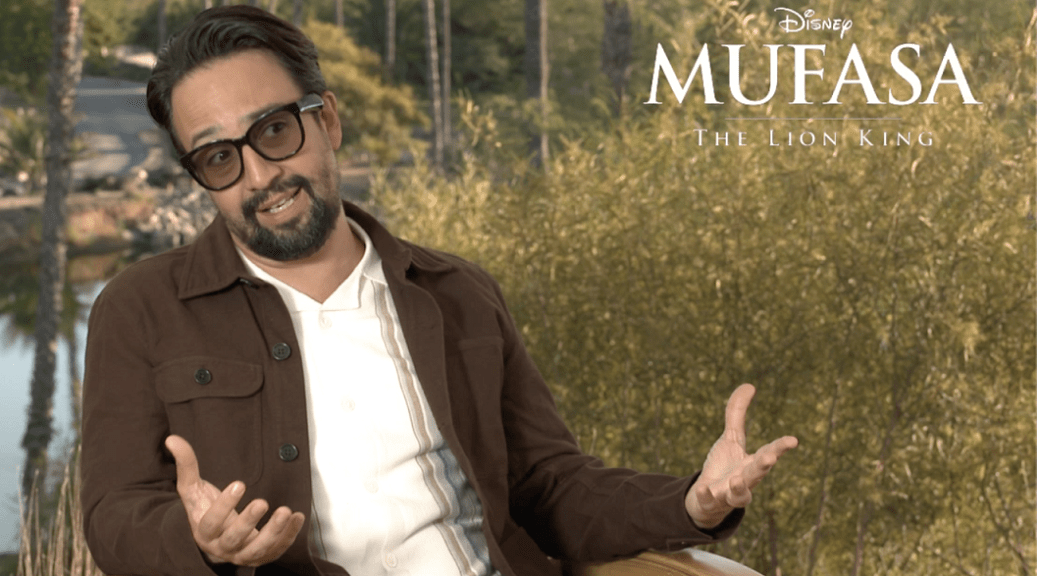
It’s hard to overstate what a cultural phenomenon The Lion King soundtrack was in 1994. Of the five songs written by Elton John and lyricist Tim Rice, three were nominated for Best Original Song at the Oscars (with ballad “Can You Feel the Love Tonight” triumphing over the epic “Circle of Life” and the exuberant “Hakuna Matata”). Two were nominated for Song of the Year at the Grammys. The soundtrack album was the biggest-selling record of the year in the US, holding off competition from the likes of Nirvana, Green Day and TLC. The songs form the basis of the highest-grossing musical in the history of Broadway. Thirty years on they remain embedded in our collective consciousness, so Lin-Manuel Miranda could be forgiven for feeling wary about being called on to provide the tunes for follow-up Mufasa: The Lion King. “Well, when you list it like that, it’s terrifying!” he says, a sly grin breaking through his black goatee. “I didn’t think about any of those stats!”
Miranda, of course, knows a thing or two about creating cultural phenomenons himself. The 44-year-old New Yorker made his Broadway debut in 2008 with his Tony Award-winning musical In the Heights. A few years later came Hamilton, the hip-hop-inspired historical musical about one of the founding fathers of the US that became a bona fide pop culture juggernaut. It’s been a fixture on Broadway since it debuted in 2015, and in London’s West End since 2017.
Given his track record, Miranda didn’t feel the need to seek counsel from his predecessors John or Rice. “I’ve spoken to them about other stuff. This hasn’t come up,” he demurs. “He’s been very busy,” he adds of Elton. “He’s got Devil Wears Prada and Tammy Faye.” The former, a musical based on the 2006 fashion comedy, began its run in the West End in October. The latter, about the life of evangelist Tammy Faye Bakker, opened on Broadway in November, although it has since announced its closure. “We’ve almost switched,” says Miranda. “He’s like the Broadway baby right now and I’m writing this movie music.”
Growing up in Manhattan in a middle-class Puerto Rican family, Miranda had his sights on the bright lights of Broadway from an early age. He started writing In the Heights while attending Wesleyan University, setting the story in the Washington Heights neighbourhood where he still lives with his wife Vanessa Nadal, whom he’s known since high school. They have two sons, 10 and six, with the eldest named after Sebastian the crab from The Little Mermaid. Clearly, Miranda’s love of Disney runs deep. Today, we’re sitting in the shade at San Diego Safari Park, with giraffe, rhino and Somali wild ass grazing on an ersatz savannah behind us. In a separate enclosure nearby, an impressively maned African lion named Bo lazes in the sunshine. The location has been chosen by Disney for its long association with The Lion King franchise: legend has it that animators visited the park ahead of the 1994 original for inspiration and promptly added Timon to the script as comic relief after falling in love with the meerkats.
In a city where you’re rarely further than a drunken stumble from a world-class taco truck and even A-list actors celebrate winning their Oscars by feasting on In-N-Out burgers, it can sometimes seem like casual food is king. Yet the truth is, Los Angeles has a rich and thriving fine dining scene with more than its fair share of high-end restaurants where exciting, innovative dishes are the real stars. So whether you’re celebrating a special occasion or simply in the mood for a Michelin-approved meal you won’t soon forget, remember the wise words of the anthropomorphic French candlestick who became a Hollywood icon singing: ‘If you’re stressed, it’s fine dining we suggest…’ Be our guest and enjoy the best fine dining establishments in Los Angeles.
Ardor
The Sunset Strip is a storied stretch of West Hollywood famous for debauched rock clubs, riotous bars and historic hotels, but it hasn’t always been a go-to destination for fine dining. That changed most recently in 2019 with the opening of Ardor at the West Hollywood Edition which delivers a vegetable-forward take on California cuisine. The restaurant itself, designed by British minimalist architect John Pawson, is sleek and modern, lined with lush greenery, and the plates are just as elegantly designed. The tower of tempura onion rings arrives perfectly seasoned, while the fluffy milk bread with beefsteak tomato is delightful whether or not you choose to dip it in the creamy king crab ballerine. For dessert, don’t leave without trying the pineapple arroz con leche. The Sunset Strip may no longer be as rambunctious as in its 1970s heyday, but these days it’s delivering a higher class of culinary thrills.
Providence
Providence is the real deal. First opened in 2005 and the proud owner of two Michelin stars since 2008, this James Beard Award-winning restaurant is deservedly renowned for its spectacular and imaginative seafood-tasting menu. Their attention to detail is apparent from the moment you step off Melrose Avenue and take the plunge into the deep blue somewhere of the recently revamped interior. Glass ‘sea cloud’ installations by the Parisian artist Jeremy Maxwell Wintrebert seem to drift overhead above moonlit seascapes by San Diego painter Peter Halasz. The establishment’s admirable commitment to sustainability is evidenced by the rooftop habitat garden that produces herbs, salads and honey.
The latter makes an appearance in the sublime Bee’s Sneeze cocktail, one highlight of the excellent bar which also boasts one of the city’s finest whisky collections. All of this helps set the stage for chef Michael Cimarusti’s ever-evolving tasting menu, which currently includes highlights such as a delicate uni tartlet with tsukudani and French butter and a miniature lobster roll with white truffle and caviar. For those who enjoy a show with their dinner, it’s possible to reserve a seat in the chef’s tasting room which offers a live view of Cimarusti and his team at work. One of the true can’t-miss restaurant experiences in Los Angeles.
Next time you hear Gala’s rave hit “Freed From Desire”, spare a thought for Danny Dyer. When the Rivals actor’s beloved West Ham won the UEFA Europa Conference League last year, the team’s star winger (and Dyer’s future son-in-law) Jarrod Bowen scored the winner in the 90th minute and sparked euphoric scenes all the way from Prague to East London. The stands were quickly reverberating with a crude folk anthem set to the song’s tune. “Bowen’s on fire,” sang the fans. “And he’s shagging Dani Dyer!” Luckily, Dyer was able to see the funny side. “I think there’s a bit of romance in it,” he told an interviewer later. “Think about it: It’s a compliment. They’re saying Bowen is on fire, which is unreal, and he’s also shagging Dani Dyer. So if you think about it, they’re saying it can’t get any better. So there’s a compliment in there. Listen, sometimes I’ll start the song off.”
Dyer isn’t the only one to get caught up in the irresistible surge of energy sparked by “Freed By Desire.” In the last few years, the song has become a ubiquitous presence everywhere from football terraces to darts tournaments and protest marches around the world. Last year striking teachers sang: “My pay’s no higher, Rishi Sunak is a liar…”, while countless football fans have adapted the lyrics to fit their favourite players, a trend that began in 2016 when Newcastle United fans sang it in tribute to Aleksandar Mitrović and a Wigan Athletic fan went viral after recording himself singing about striker Will Grigg.
The song, which has just been re-recorded and released, was an international hit and peaked at number 2 on the UK charts back in 1997. Its resurgence may have come as a surprise to some but not to its creator, Gala Rizzatto. “The people brought the song back,” she says over Zoom from her home in Brooklyn. “People say to me: ‘How do you feel about it? It’s so random!’ It’s not fucking random. It’s energy, energy, energy. You put in energy, and somehow it comes back.”
A quarter of a century ago, it seemed like nobody wanted Dogma. Kevin Smith’s subversive comedy about a pair of disgraced angels (played by Ben Affleck and Matt Damon) was met with fierce protests soon after it debuted at the Cannes Film Festival. Writer-director Smith, riding high off his 1997 romcom Chasing Amy, received 300,000 pieces of hate mail, including several “bona fide death threats”. Religious campaign group the Catholic League picketed outside cinemas. Critics also sharpened their knives, with The Independent’s Gilbert Adair among those who crucified the film. “Nothing, absolutely nothing, not a single idea, not a shot, not a camera movement, not a performance, not a gesture, not a gag, nothing at all, I repeat, works in this movie,” he sneered.
Some of us, though, couldn’t get enough of the film, which celebrates its 25th anniversary on 12 November. I was a Sunday School-attending teenager when I first stumbled across Dogma on late-night television, and I was hooked from the moment Linda Fiorentino’s beleaguered abortion counsellor Bethany set upon Alan Rickman’s Metatron, the flaming voice of God, with a fire extinguisher. He had appeared in her bedroom to recruit her on a quest to stop Bartleby and Loki, Affleck and Damon’s fallen angels, from making it to a church in New Jersey. There they intend to use a doctrinal loophole known as a “plenary indulgence” to wash away all their sins and sneak back into heaven. What they don’t realise is that in doing so they’ll disprove the fundamental concept of God’s omnipotence and immediately wipe out all of existence.
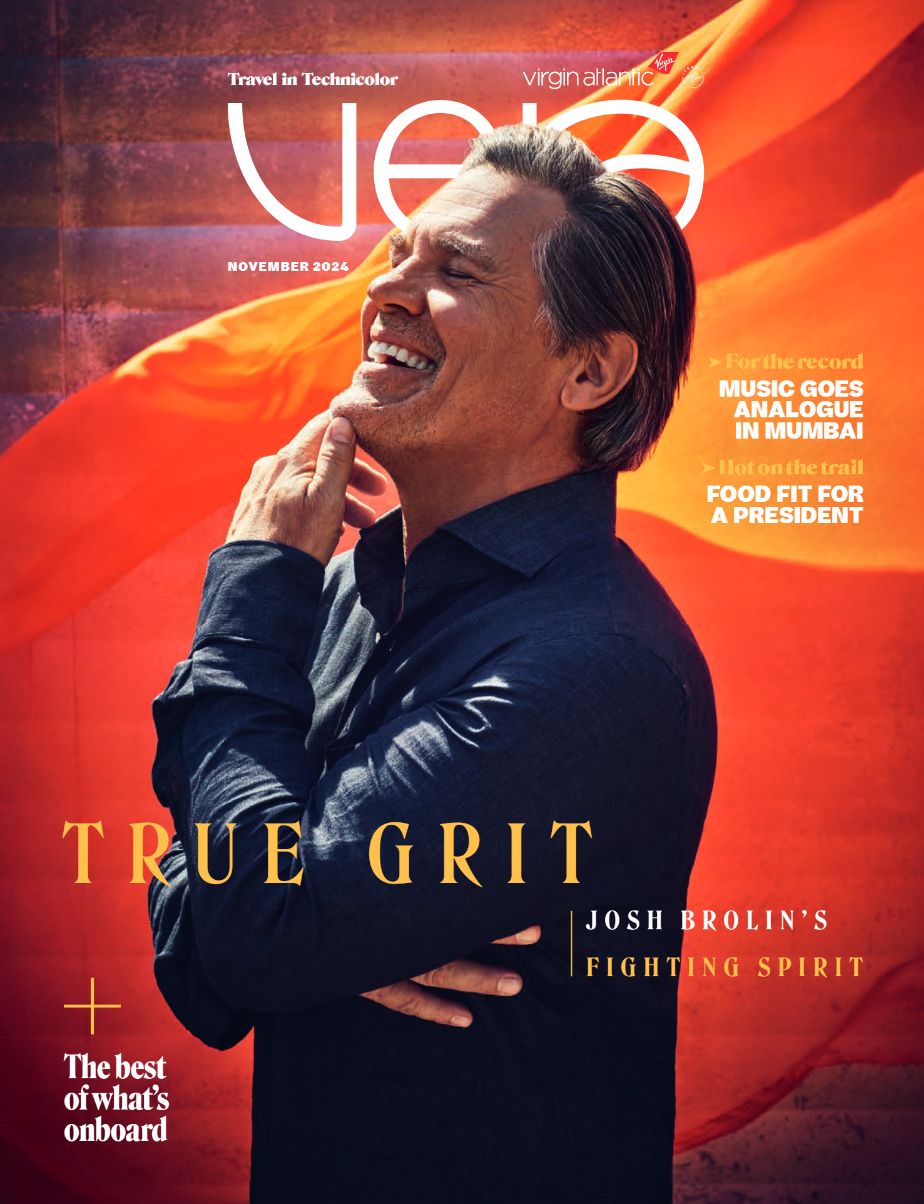
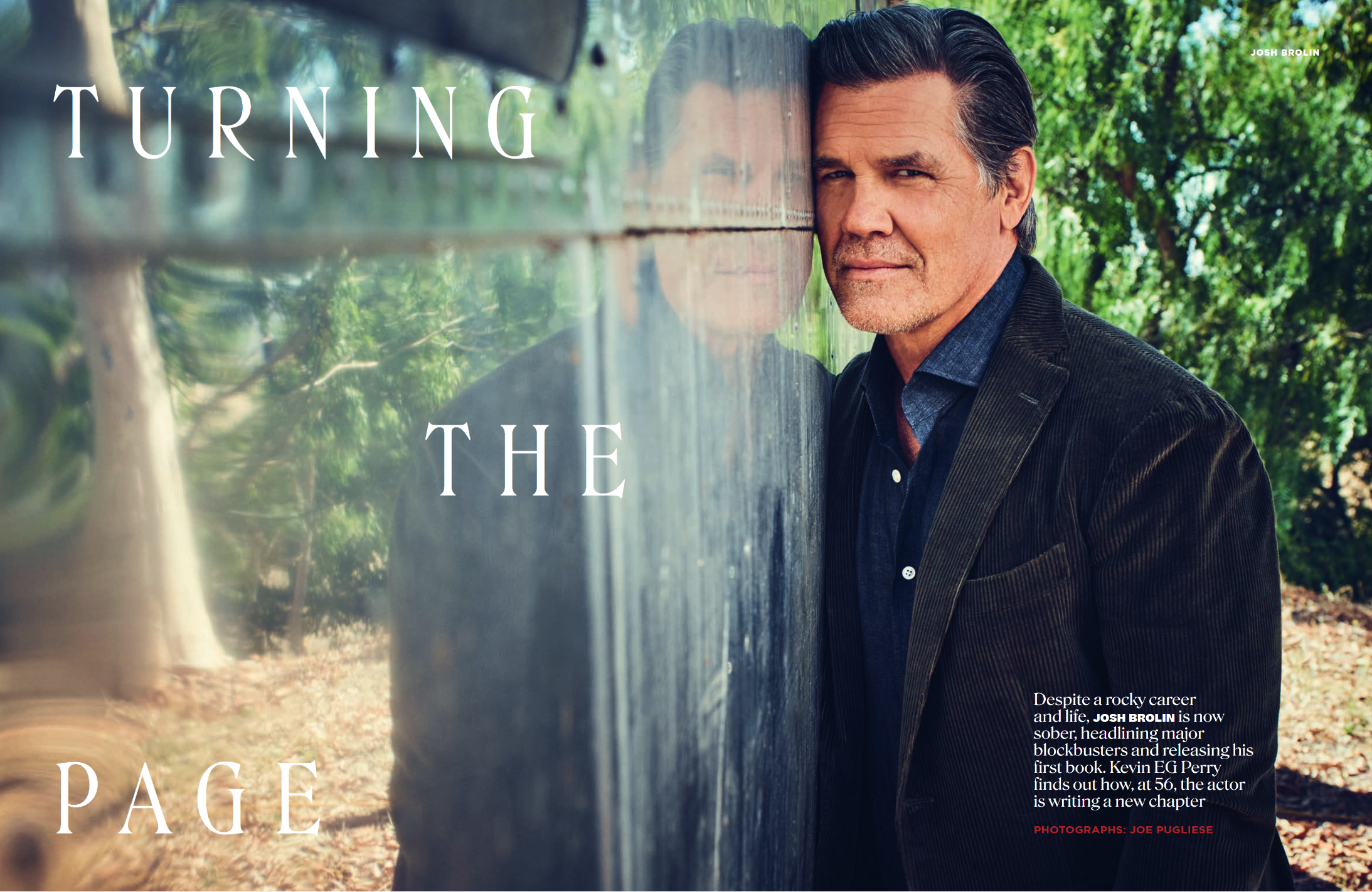
Josh Brolin slows his big black pick-up truck to a crawl as soon as he spots the injured deer on the mountain road ahead of us. He gives the wounded animal a wide berth and pulls up alongside a sheriff already on the scene, exchanging a few words of concern and expressing brotherly solidarity with the lawman’s watchful task. A moment later we pull away, continuing our winding descent from the remote Malibu film ranch where the 56-year-old has spent the morning being photographed for the cover of this month’s Vera. For the first time in the few hours we’ve spent together, Brolin falls into a contemplative silence.
The Oscar-nominated star of No Country For Old Men and Avengers: Endgame may have inherited his surname and his good looks from his TV-famous father, James Brolin, but he wasn’t born into a movie career. Rather than spending his childhood amid the glitz and sheen of Hollywood, Brolin grew up with dirt under his fingernails on a ranch outside Paso Robles, several hours north up the California coast, where his fierce and unpredictable mother Jane Cameron Agee kept a sort of menagerie.
“Whether I was birthing mountain lions, or cleaning wolf cages, or feeding 65 horses at 5:30 in the morning at eight years old… it was a pain in the ass,” Brolin tells me with a grin that breaks through his powder-white goatee. “But I look back on it now and I’m happy. Once directed properly, it gave me the ability to face fear in a very productive way… like with writing this book.”
The book in question is From Under The Truck, Brolin’s soon-to-be-published memoir that’s about as far from a clichéd celebrity autobiography as you’re ever likely to lay eyes on. He calls publishing it: “The scariest thing I’ve ever felt in my life.” It’s a raw, surprising and deeply affecting work from a man who dreamed of being a writer long before he ever stumbled his way into his father’s profession. “It’s what I’ve always loved, number one,” he tells me earnestly about writing. “I’ve never not done it every day.”
From Under The Truck throws out conventions like chronological time to skip back and forth between tales of love and loss, professional victories undone by alcoholism, childhood trauma and drug-fuelled teenage escapades. There are skittering poems, romantic vignettes and keenly-observed dialogues that read like kitchen-sink dramas. At the heart of it all there’s Jane, a hard-drinking, rabble-rousing, larger-than-life character who preached the gospel of country-and-western and raised her son to be an ass-kicker in her own image before driving drunk into a tree and dying at 55. “I had no plan to write a book. I just started writing, and then when I finished I realised I was 55,” Brolin says softly. “I went: ‘Jesus Christ, I thought my mom was old when she died.’ I thought she’d lived a good, full life. I realised she was young, super young. There was a whole other life to be lived.”
Brolin’s own life is proof of the possibility of second acts, and even further reinventions beyond that. At 13 he was dropping acid in the Santa Barbara suburb of Montecito, a member of a punk rock surf crew known as the Cito Rats, watching friends die young and assuming a similar fate awaited him. When his mother predicted he’d follow in his father’s footsteps, he pushed back hard. “I don’t know if I’ve ever told anybody this,” he says, running a hand through his salt-and-pepper hair. “At one point she said: ‘You know you’re going to be an actor.’ I had no interest in acting. Zero. I didn’t care for what my dad did. It made him go away a lot. The fluctuations in money made no sense to me. I hated that she said that. It made me hate it even more.”
Things changed when he took a high school improv class. He liked making people laugh by transforming into someone else, liked having to think on his feet. When he was kicked out of home he went to stay on his dad’s couch. “I just started going on audition after audition,” he remembers. “Maybe the Brolin name made people curious, but I also know people tried to stop me getting jobs because I was Brolin’s son. The Goonies was like the 300-and-something audition. I went back in six times because they wanted to make sure I was right for that part.” He was, and a bandanna-wearing 17-year-old Brolin made his screen debut in the much-loved adventure classic in 1985. “It was a silver platter experience,” he says. “It was all downhill after that!”
Almost before he realised it, Brolin’s promising future was behind him. He followed the The Goonies with a string of forgotten, forgettable films. “What did I do after Goonies?” Brolin asks rhetorically. “I was in the business 22 years and nobody cared.” In the book, Brolin juxtaposes his memories of Goonies with his impressions of landing the lead role in the Coen Brothers’ Oscar-winning No Country For Old Men over two decades later. “Those are the two milestones,” he explains.
The role remade his career overnight. “Before No Country I wasn’t making any money,” Brolin says matter-of-factly, explaining he took up day trading to support his two kids from his first marriage to actress Alice Adair. “I was always a numbers person, the geek in school that would ask the math teacher for extra work, so I was good at it. I realised I was watching fear and greed, and success had everything to do with discipline. I made more money trading than I’d ever made from acting up to that point.”
After No Country, he had his pick of roles and specialised in deconstructing masculine archetypes. He earned an Oscar nomination in 2009 for rendering the “pathetic” Dan White sympathetic in Gus Van Sant’s Milk, and gave vivid life to the chocolate-banana-inhaling, hippie-stomping cop “Bigfoot” Bjornsen in Paul Thomas Anderson’s sublime stoner noir Inherent Vice. Days before shooting the latter, Brolin and his now-wife Kathryn Boyd were on a drunken night out in Costa Rica when a stranger stabbed him in the gut. Only the fluke that the blade went directly into the thick umbilical ligament around his belly button saved his life. “I’m not going to win the lottery,” he says, shaking his head with a laugh at his luck. “I just get to live.”
It was one of many moments that convinced Brolin, in 2013, that it was time to get sober. “I’m not proud of a lot of stuff I did,” he reflects. “I was pretty crazy back then. I was very reactive when I drank.” He recognised the darker sides of his mother’s character in himself, and realised he didn’t want his story to end the way hers had. “Having a mother like Jane was amazing, but it was also awful,” he says. “I don’t really wish that on anybody.” He wanted something different for his own kids. “It wasn’t necessarily a conscious choice, but it’s about breaking that chain. I think they thought: ‘He’s a good dude, but he’s crazy.’ That was the general perception. When I first got sober, Eddie Vedder said to me: ‘Surprise everyone with a happy ending.’”
So he did. There were the blockbuster roles as Thanos, the finger-snapping baddie bent on wiping out half of all life in the box office-conquering Avengers films, and meaty collaborations with Denis Villeneuve in the tightly-wound thriller Sicario and both instalments of sci-fi epic Dune. More importantly, for Brolin, there was the chance to prove himself the writer he’d always hoped to become. Along with the memoir he’s written a play, A Pig’s Nest, also partly inspired by his wild, wildlife-filled upbringing. Meanwhile, at home, he sees bright flashes of his mother’s sense of freedom in his two young daughters, whose toy unicorns and baby dolls are strewn colourfully around inside the truck.
We’re finally nearing the base of the mountain. As we hit the layer of fog that lingers above the Pacific Coast Highway, our phones chirrup to life to let us know we’ve returned to the zone of phone reception. I tell Brolin he can drop me anywhere I can call a car, but he won’t hear of it. He’s already decided he’s driving me home himself, hours out of his way. Maybe because he can’t bring himself to leave me stranded on the roadside, like the deer up the mountain. Maybe because he hasn’t finished telling me about the surprise of a happy ending.
Right before his mother died, in 1995, he was visiting her at home when he found her crying in the kitchen. Not from pain, but from pride. She was developing a TV idea about animal rescues, and for the first time in her life felt she was being taken seriously. “Her whole life she had felt like the woman with the beard, the snake with two heads,” Brolin explains. “She was just opening up to the fact that maybe she wasn’t just a freak… and then she died. For me to live that out, and to get past my own reactive Cito Rat mentality… there was survivor’s guilt for a while, but now it’s up to me to celebrate every moment I get to keep going.”
The old stereotype that Los Angeles is a shallow place obsessed with appearance and ephemeral beauty doesn’t hold much water when measured against the impressive number of world-class museums the city has to offer. Not only are the following institutions filled with fascinating treasures, artefacts and artworks from around with world, they’re often based in truly beautiful buildings in their own right, and home to relaxing gardens, sun-kissed courtyards and unparalleled views. These are the museums that are not-to-be missed in the City of Angels.
Los Angeles might be most readily associated with Hollywood’s celluloid dreams, but it’s also heaven for art collectors. The city is dotted with a panoply of contemporary galleries, ranging from purpose-built spaces to converted studios and strip-malls. Here you’ll find emerging American artists side-by-side with the best international talent, and museum-quality collections vying for room beside urgent and thought-provoking street art. Los Angeles, famously, is a patchwork of contrasting scenes and neighbourhoods, but one thing that unites them all is that this has always been a place to see and be seen. That’s never been more true than at these trailblazing art galleries.
“Well, I’ll be damned, Here comes your ghost again…”
Joan Baez, also known as the “Queen of Folk”, is halfway through writing a song one day when she gets a call from Bob Dylan. It’s 1974; almost 10 years after their relationship ended. The song went on to become the iconic ‘Diamonds and Rust’, an outpouring of memories from their time together in the early sixties.
Music writer Kevin EG Perry tells the story behind Baez and Dylan’s relationship, how they shaped each other’s worlds, and how this song came into being a decade later. Folk legend Judy Collins, also a good friend of Joan Baez, shares old memories of Newport Folk Festival alongside more recent memories of performing ‘Diamonds and Rust’ with Baez at her 80th birthday. And we hear from people whose lives have been touched by the song. Classicist Edith Hall listened to ‘Diamonds and Rust’ on repeat when she ended her first marriage, on the night that the Berlin Wall fell. And writer John Stewart looks back on a heady relationship from his early twenties, which was always bound up with the lyrics of this song. Decades later, this formative time in his life continues to resonate with diamonds, rust, and gratitude.
They were supposed to be real-life fountains of youth. In March 2000 the term “Blue Zone” was first used to describe Sardinia, an Italian island that appeared to be home to a statistically improbable number of people living past the age of 100. In the decades since, four more areas have been identified around the globe where locals apparently have an increased chance of becoming a centenarian: Okinawa in Japan; Nicoya in Costa Rica; Ikaria in Greece and Loma Linda in California. These so-called Blue Zones have inspired countless studies, cookbooks, travel stories and even their own Netflix documentary series (2023’s Live to 100: Secrets of the Blue Zones). The trouble is, the outlandish claims about the life-giving properties of these regions just don’t stand up to close scrutiny.
Last month, Dr Saul Newman of the Oxford Institute of Population Ageing was awarded the Ig Nobel Prize for his work debunking Blue Zones. Newman’s investigation into serious flaws in the data about the world’s oldest people saw him take home an award that has been handed out since 1991 for scientific research that “makes people laugh, and then think.” Newman says that when he looked into the claims about Blue Zones he found a pattern of significant data being routinely ignored if it didn’t fit the desired narrative, and statistical anomalies that could be better explained by administrative errors or cases of pension fraud. “It’s as if you gave the captain of the Titanic nine goes at it and he’s smacked into the iceberg every time,” Newman tells The Independent of the research. “What’s most astounding is that nobody in the academic community seems to have thought it’s ridiculous before this. It’s absurd.”
Take Sardinia, the original Blue Zone. While it was purported to be home to crowds of centenarians, EU figures show that the island only ranks around 36-44th for longevity in the continent. Many of those who were supposed to have reached very old age in their Italian idyll turned out to in fact be dead, they just hadn’t been reported as such to the authorities. “Sometimes the mafia is involved, sometimes it’s carers,” says Newman. “There’s a lot of cases in Italy where younger relatives have just kept claiming the pension even though granddad’s out the back in the olive garden.”
Kevin EG Perry is a writer for The Independent, The Guardian, GQ, NME, Empire, Wallpaper*, Vice, Lonely Planet Traveller and other reputable publications








































 Kevin EG Perry: Collected Works